Challenge Test for Cosmetics: EU Compliance Guide 2026
A comprehensive resource on cosmetic challenge testing (preservative efficacy testing) for EU/UK market compliance. Learn about ISO 11930 test methods, pricing from €200, timelines, and how to ensure your preservative system protects against microbial contamination.
 Get Your Challenge Test Quote →
Publisher: Challenge Test Cosmetics
Last verified: February 2026
Sources cited: 8 official regulatory and standards sources
This guide synthesizes information from EU Regulation 1223/2009, ISO 11930:2019, and the United States Pharmacopeia (USP 51).
Published: February 17, 2026 | Last updated: February 17, 2026
What Is a Challenge Test for Cosmetics?
Definition and Purpose
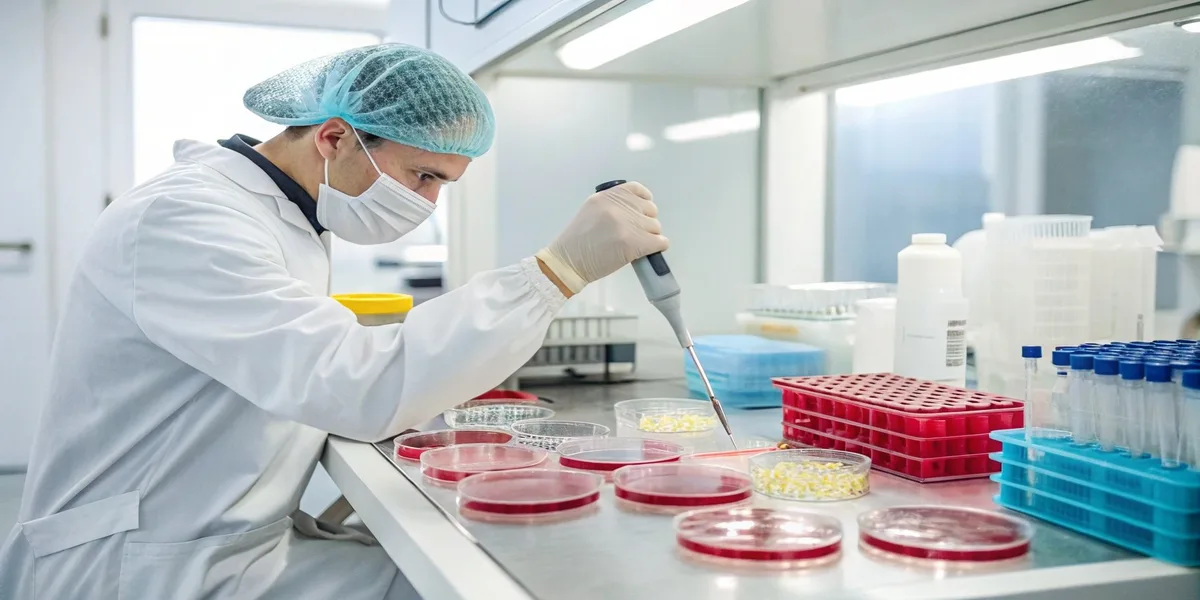
A challenge test for cosmetics (also called a preservative efficacy test, PET, or antimicrobial effectiveness testing) is a standardized laboratory procedure that evaluates whether a cosmetic product's preservative system can adequately protect against microbial contamination during normal consumer use. It is the primary method used to demonstrate the microbiological safety of cosmetic formulations under EU Regulation 1223/2009 [1].
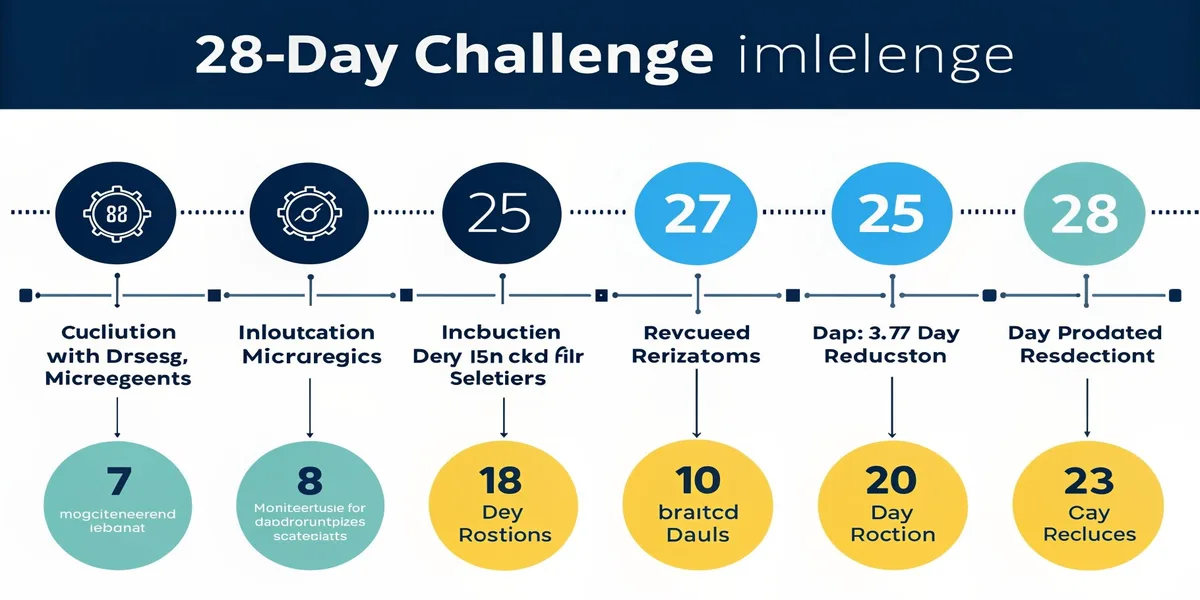
The challenge test procedure simulates real-world contamination by intentionally inoculating the product with known quantities of five standard microorganisms: bacteria, yeast, and mold. Over a 28-day period, the laboratory monitors whether the preservative system eliminates or controls these organisms, measuring the log reduction at intervals on Day 2, Day 7, Day 14, and Day 28.
For cosmetic products sold in the European Union and United Kingdom, cosmetic challenge testing is required as part of the Cosmetic Product Safety Report (CPSR) under EU Regulation 1223/2009, Article 10 and Annex I [1]. The most widely accepted test method in Europe is ISO 11930:2019 [2], though other methods like USP 51 [3] and PCPC are also recognized.
How Challenge Testing Works
The challenge test procedure provides objective, quantifiable evidence that your preservative system works effectively. The laboratory introduces standardized strains of bacteria (Escherichia coli, Pseudomonas aeruginosa, Staphylococcus aureus), yeast (Candida albicans), and mold (Aspergillus brasiliensis) into separate product samples at concentrations of 10⁵–10⁶ colony-forming units per gram.
During this challenge test procedure, the lab counts surviving organisms at each measurement point and calculates the log reduction compared to the initial inoculum. The results determine whether your cosmetic product safety meets the required standard. Products that achieve sufficient microbial kill during this preservative challenge test receive a passing grade, which becomes a key document in the CPSR Part A safety assessment dossier.
Challenge Test vs Preservative Efficacy Test: Are They the Same?
Yes. A challenge test and a preservative efficacy test are identical procedures. The terminology varies by region, regulatory context, and industry preference, but the underlying science is exactly the same.
Regional Terminology Differences
| Term | Common Usage |
|---|---|
| Challenge test | EU/UK contexts, ISO 11930 [2] documentation |
| Preservative efficacy test (PET) | European cosmetic formulation and safety assessment |
| Antimicrobial efficacy test (AET) | Pharmaceutical contexts, USP 51 [3] |
| Antimicrobial effectiveness testing | FDA [6] terminology, United States |
| Preservative challenge test | Hybrid term used across regions |
A challenge test, preservative efficacy test (PET), and antimicrobial efficacy test (AET) are identical procedures. The name varies by region and regulatory context, but the science is exactly the same.
Regardless of the name used, the fundamental procedure remains the same: introducing microorganisms into the product and measuring the preservative system's ability to eliminate or control them over time. When working with ISO 17025 [4] accredited laboratories, always confirm which test method (ISO 11930, USP 51, or PCPC) will be used, as this affects the acceptance criteria and regulatory recognition for your cosmetic challenge testing results.
Why Is Challenge Testing Required for EU Cosmetics?
EU Regulation 1223/2009 Requirements
EU Regulation 1223/2009 [1] on cosmetic products establishes the legal framework for cosmetic product safety in the European Union and European Economic Area. Article 10 requires manufacturers to compile a Cosmetic Product Safety Report (CPSR) before placing any cosmetic product on the EU market.
Part A of the CPSR (Product Safety Information) must contain evidence of adequate preservation for products susceptible to microbial contamination. For most water-containing cosmetics, a challenge test for cosmetics conducted according to ISO 11930:2019 [2] is the standard method to demonstrate this evidence.
CPSR Part A Compliance
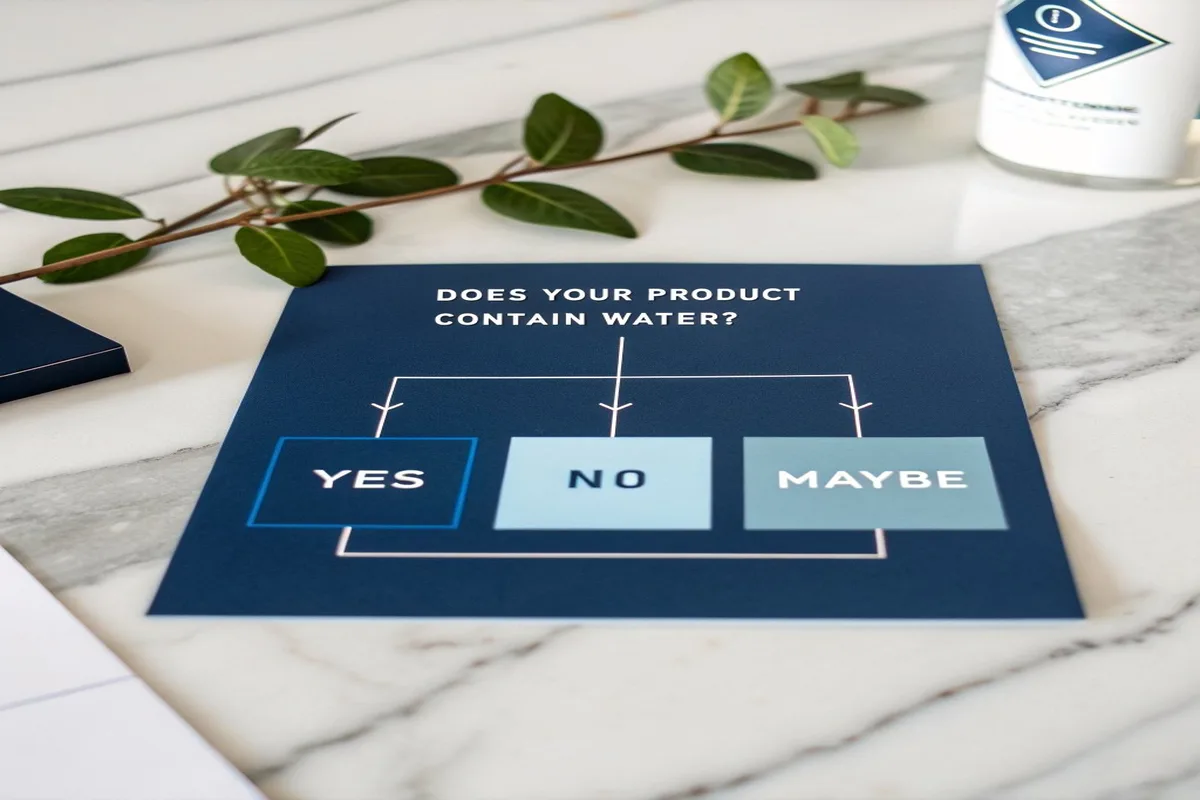
A preservative efficacy test is typically required when the product contains water (aqua) as an ingredient, the product is an emulsion (cream, lotion, milk), the product has a water activity (aw) above 0.75, the product is intended for multi-use over weeks or months, or the packaging allows repeated consumer contact.
Under ISO 29621:2017 [7] guidance, certain products may be considered "microbiologically low-risk" and may not require challenge testing. These include anhydrous products (oils, balms, butters), products with high alcohol content (>20% ethanol), powders and dry products, single-use packaging, and products with water activity below 0.6.
The final decision on whether testing is required rests with your cosmetic safety assessor, who evaluates the specific formulation, packaging, intended use, and target consumer population. Many safety assessors require cosmetic challenge testing even for edge cases to minimize regulatory risk and ensure cosmetic product safety.

Do All Cosmetic Products Need a Challenge Test?
No. Not all cosmetic products require cosmetic challenge testing. The need for a preservative challenge test depends primarily on whether the product formulation can support microbial growth.
Product Types That Require Testing
| Product Type | Testing Required? | Reason |
|---|---|---|
| Water-based (serums, toners, gels) | Yes | Water supports bacterial and fungal growth |
| Emulsions (creams, lotions, milks) | Yes | Water + oil phases support diverse microorganisms |
| Natural/organic with botanicals | Yes | Botanical extracts introduce microorganisms |
| Anhydrous (oils, balms, butters) | Usually no | Water activity below 0.6 aw per ISO 29621 [7] |
| High-alcohol (>20% ethanol) | Usually no | Alcohol is self-preserving |
| Powders and dry cosmetics | Usually no | Insufficient moisture for microbial growth |
| Single-use packaging | Usually no | No repeated contamination opportunity |
Exempt Product Categories
Products classified as microbiologically low-risk under ISO 29621:2017 [7] may not require a preservative efficacy test. These include anhydrous formulations with zero water content and water activity below 0.6 aw, products with alcohol content above 20% ethanol, powders and dry cosmetics, and single-use or single-dose packaging formats.
Some products fall into ambiguous categories. Anhydrous balms that may contact water during use, products with borderline water activity (0.6–0.75 aw), and products with moderate alcohol content (10–20% ethanol) require case-by-case evaluation by your cosmetic safety assessor.
Water-based cosmetics sold in the EU without a valid challenge test report risk regulatory action, product recalls, and — in serious contamination cases — consumer harm.
What Microorganisms Are Used in Challenge Testing?
The challenge test for cosmetics uses a standardized panel of microorganisms selected to represent the most common and problematic contaminants found in cosmetic products and from consumer handling.
ISO 11930 Standard Panel
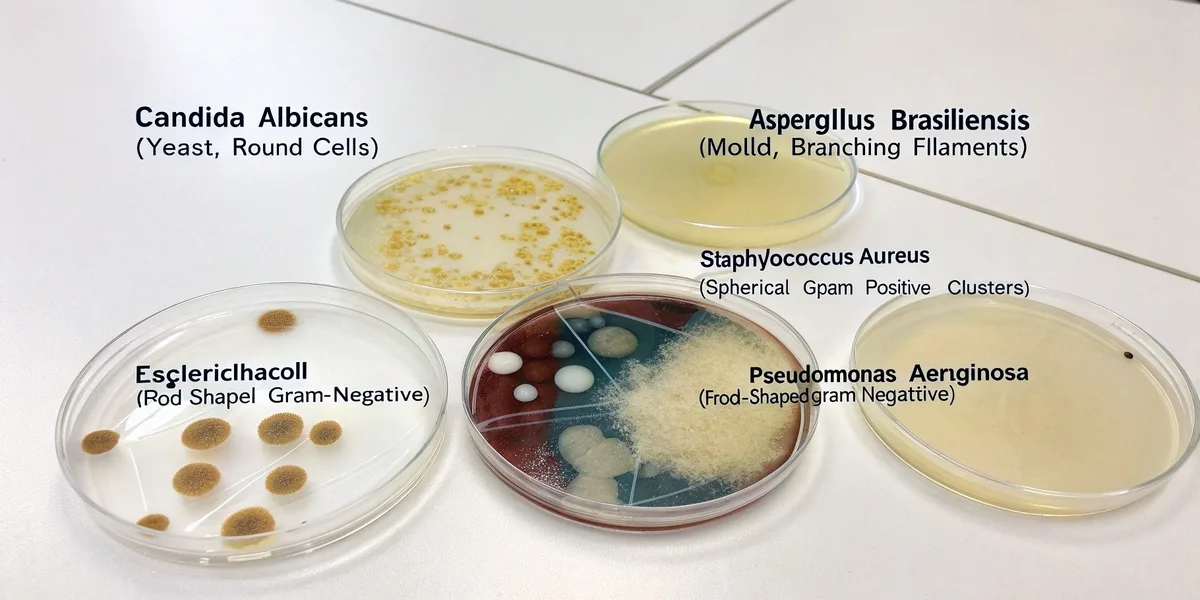
ISO 11930:2019 [2] specifies five test organisms representing bacteria, yeast, and mold:
- Escherichia coli (ATCC 8739) — Gram-negative bacteria. Represents contamination from poor hygiene during manufacture or consumer use.
- Pseudomonas aeruginosa (ATCC 9027) — Gram-negative bacteria notorious for preservative resistance. A common cosmetic spoilage organism and potential pathogen.
- Staphylococcus aureus (ATCC 6538) — Gram-positive bacteria naturally present on human skin. Represents contamination from consumer contact during product application.
- Candida albicans (ATCC 10231) — Yeast commonly found on human skin and mucous membranes. Can cause cosmetic spoilage, unpleasant odors, and texture changes.
- Aspergillus brasiliensis (ATCC 16404) — Mold (formerly classified as Aspergillus niger). Represents fungal contamination from environmental sources. Slower growing but persistent.
Why These Specific Organisms
USP Chapter <51> [3] Antimicrobial Effectiveness Testing uses the same organisms except it omits Pseudomonas aeruginosa, resulting in a 4-organism panel. This makes USP 51 slightly less stringent than ISO 11930 in terms of organism coverage.
These organisms were selected for the challenge test procedure because they represent the most common contaminants in cosmetics and during consumer use, include both Gram-positive and Gram-negative bacteria (which respond differently to preservatives), cover bacteria, yeast, and mold categories, are well-characterized and commercially available reference strains, and include organisms that are difficult to preserve against. During the preservative efficacy test, each organism is inoculated into separate product samples at known concentrations, and the lab monitors whether your preservative system eliminates or controls them according to the acceptance criteria specified in the chosen test method.
Challenge Test Methods: ISO 11930 vs USP 51 vs PCPC
Three primary test methods are recognized for cosmetic challenge testing. While they share the same fundamental approach of inoculating products with microorganisms and measuring kill rates, they differ in organism panels, acceptance criteria, and regulatory recognition.
ISO 11930 (EU Standard)
ISO 11930:2019 [2] is the European standard for evaluating the antimicrobial protection of a cosmetic product. It tests 5 organisms over 28 days with measurements at Days 0, 2, 7, 14, and 28. Results are classified as Grade A (pass), Grade B (conditional pass), or Grade C (fail). Required by most European safety assessors for CPSR documentation. Typical cost: €250–€400 per product.
USP 51 (US Pharmacopeia)
USP Chapter <51> [3] is the US Pharmacopeia method for antimicrobial effectiveness testing. It tests 4 organisms (omits P. aeruginosa) over 28 days with measurements at Days 0, 7, 14, 21, and 28. Acceptance criteria differ from ISO 11930, requiring slower but sustained bacterial kill. Preferred for US market and OTC drug products. Typical cost: €200–€350 per product.
PCPC Method
The Personal Care Products Council [8] method tests 5 organisms (same as ISO 11930) over 28 days. Acceptance criteria are similar to ISO 11930 with some industry-specific interpretations. Accepted in both US and EU markets. Typical cost: €250–€400 per product.
| Feature | ISO 11930 | USP 51 | PCPC |
|---|---|---|---|
| Organisms tested | 5 | 4 | 5 |
| Testing period | 28 days | 28 days | 28 days |
| Measurement points | Day 0, 2, 7, 14, 28 | Day 0, 7, 14, 21, 28 | Day 0, 2, 7, 14, 28 |
| Grading system | Grade A/B/C | Pass/Fail | Pass/Fail |
| Best for market | EU, UK, Switzerland | United States | US and EU |
| Cost range | €250–€400 | €200–€350 | €250–€400 |
Which Method Should You Choose?
For the EU/UK market: ISO 11930 [2] is strongly preferred. Most European safety assessors expect ISO 11930 results in the CPSR Part A. Using USP 51 may require additional justification.
For the US market: Either USP 51 or PCPC method. USP 51 is preferred for OTC drug products (sunscreens, anti-acne). PCPC is standard for conventional cosmetics.
For global markets: ISO 11930 provides the broadest acceptance across jurisdictions. Many brands conduct challenge test cosmetics using ISO 11930 to ensure worldwide regulatory compliance with a single test.
For EU and UK markets, always request ISO 11930 testing. This is the method most safety assessors require for CPSR Part A, and it provides the most widely accepted evidence of adequate preservation.
How Does a Challenge Test Work? Step-by-Step
The challenge test procedure follows a standardized 28-day protocol designed to simulate worst-case contamination scenarios during product use. Understanding this process helps formulators prepare properly and interpret results accurately.
The 28-Day Testing Protocol
Day 0 — Inoculation: The laboratory receives your cosmetic product sample (minimum 200–300g). Separate portions are inoculated with each test organism at a known concentration of 10⁵–10⁶ CFU per gram or milliliter. An immediate measurement confirms the initial inoculum concentration, establishing the baseline for all subsequent measurements.
Day 2: First measurement assessing rapid bacterial kill. Under ISO 11930 [2], bacteria must show at least a 2-log reduction (99% kill) at this point for Grade A classification.
Day 7: Second measurement. ISO 11930 requires at least a 3-log reduction (99.9% kill) for bacteria. Yeast and mold must show no increase from the initial count.
Day 14: Third measurement. Yeast and mold must demonstrate at least a 1-log reduction (90% kill). The lab checks for any microbial recovery or regrowth.
Day 28: Final measurement confirming long-term preservation with no microbial recovery. The preservative system must maintain control through the full 28-day incubation period.
Understanding Log Reduction
The log reduction is the standard measure of preservative effectiveness in a challenge test for cosmetics. It expresses the decrease in microbial population on a logarithmic scale:
- 1-log reduction = 90% kill (10-fold decrease: 1,000,000 → 100,000)
- 2-log reduction = 99% kill (100-fold decrease: 1,000,000 → 10,000)
- 3-log reduction = 99.9% kill (1,000-fold decrease: 1,000,000 → 1,000)
- 5-log reduction = 99.999% kill (100,000-fold decrease: 1,000,000 → 10)
Based on these log reduction values, ISO 11930 assigns a grade: Grade A (full pass, meets all criteria), Grade B (conditional pass, slower kill rate), or Grade C (fail, reformulation required). The final test report includes all organism counts, log reduction calculations, grade classification, and accreditation details. This report becomes part of your Product Information File (PIF) and CPSR documentation for regulatory compliance.

Challenge Test Pass/Fail Criteria
Understanding the acceptance criteria for cosmetic challenge testing is essential for formulation success. The criteria define the minimum level of microorganisms that must be killed at specific time points during the preservative efficacy test.
ISO 11930 Acceptance Criteria
ISO 11930 [2] uses a three-tier grading system based on how quickly and completely the preservative system eliminates each test organism.
| Organism Type | Grade A (Pass) | Grade B (Conditional) | Grade C (Fail) |
|---|---|---|---|
| Bacteria (E. coli, P. aeruginosa, S. aureus) | ≥2-log by Day 2, ≥3-log by Day 7, no recovery to Day 28 | ≥2-log by Day 7, ≥3-log by Day 14, no recovery to Day 28 | Does not meet Grade B |
| Yeast & mold (C. albicans, A. brasiliensis) | No increase by Day 7, ≥1-log by Day 14, no recovery to Day 28 | No increase by Day 14, no recovery to Day 28 | Does not meet Grade B |
Grade A, B, and C Classification
Grade A (Pass): The preservative system effectively eliminates all test organisms within the required timeframes. This is the target result for all cosmetic products and provides the strongest evidence for CPSR Part A compliance.
Grade B (Conditional Pass): The preservative system controls microorganisms but more slowly than Grade A criteria require. Grade B results may be acceptable for products with low contamination risk (e.g., leave-on products applied to intact skin in hygienic conditions). Your safety assessor determines whether Grade B is sufficient for your specific product and its test protocols.
Grade C (Fail): The preservative system fails to adequately control the level of microorganisms. Reformulation is required. Common failure scenarios include insufficient log reduction at any measurement point, microbial recovery (regrowth) after initial reduction, and increase in yeast or mold counts during the test period.
USP 51 [3] has different criteria: bacteria require ≥1-log reduction by Day 7, ≥3-log by Day 14, with no increase through Day 28. Yeast and mold must show no increase from the initial count through Day 28. USP 51 is generally considered slightly less stringent than ISO 11930 Grade A.
Validate Your Preservative System →How Much Does a Cosmetic Challenge Test Cost?
The cost of a challenge test for cosmetics varies by test method, laboratory accreditation, turnaround time, and volume. Here is a comprehensive pricing breakdown for European ISO 17025 [4] accredited laboratories as of 2026.
Standard Pricing by Test Method
| Test Method | Standard Price | Rush Price (+50%) | Turnaround |
|---|---|---|---|
| ISO 11930 (5 organisms) | €250–€400 | €375–€600 | 30–35 days / 16–18 days |
| USP 51 (4 organisms) | €200–€350 | €300–€525 | 30–35 days / 16–18 days |
| PCPC Method (5 organisms) | €250–€400 | €375–€600 | 30–35 days / 16–18 days |
Bundle Discounts
Most ISO 17025 [4] accredited laboratories offer discounts when testing multiple products simultaneously:
- 3–5 products: 10% discount per product
- 6–10 products: 15% discount per product
- 10+ products: 20% discount per product (negotiate directly with the laboratory)
For example, testing 5 products using ISO 11930 at €300 each with a 10% bundle discount would cost approximately €1,350 instead of €1,500.
Rush Service and Retest Pricing
Rush service accelerates the testing period from 28 days to 14 days using a modified incubation protocol. This option is essential for product launches with tight timelines. Rush service typically adds 50% to the standard price.
Retest after reformulation: If your product fails the initial preservative efficacy test and you reformulate, most laboratories offer reduced pricing:
- Full retest (all 5 organisms): €150–€250
- Partial retest (failing organism only): €80–€150
A standard challenge test cosmetics package includes testing of all required organisms, all measurement points, log reduction calculations and grade assignment, formal test report with laboratory signature and accreditation details, and PDF and hard copy delivery.
Request Custom Quote →How Long Does Challenge Testing Take?
The timeline for cosmetic challenge testing depends on the test method, laboratory workload, and whether you choose standard or rush service.
Standard vs Rush Timeline
Standard service (30–35 days total): After sample receipt, the laboratory conducts intake verification and pH measurement (1–2 days), then begins the 28-day incubation protocol with measurements at Days 0, 2, 7, 14, and 28. Report preparation and quality review adds 2–7 days after the final measurement.
Rush service (16–18 days total): Uses an accelerated 14-day testing period with increased measurement frequency. The laboratory prioritises your sample and expedites report delivery. Rush service costs approximately 50% more than standard pricing but can save 2–3 weeks.
Peak laboratory seasons (September–November before holiday launches, January–March before summer launches) may add 3–7 days. International UK-EU shipping with customs clearance can add 2–5 days post-Brexit.
Planning for Product Launch
When planning your product launch timeline, account for the full challenge test pipeline:
- Challenge test: 30–35 days standard, 16–18 days rush
- Potential retest after failure: +30–35 days additional if reformulation is needed
- CPSR completion: 5–10 days after receiving the test report
- CPNP/SCPN registration: 1 day (can run concurrently with CPSR)
- Manufacturing lead time: 15–60 days depending on batch size
Recommended total lead time from formulation freeze to market launch: 60–90 days minimum. Planning ahead for your challenge test cosmetics timeline prevents last-minute delays. Build buffer time for potential reformulation and retesting. Contact the laboratory early to reserve testing slots during peak seasons, provide 300g minimum to avoid sample quantity issues, and have complete documentation (INCI list, preservative details, pH) ready before sample shipment. Products with adequate shelf life planning benefit from a well-timed challenge test for cosmetics.
How to Prepare Samples for Challenge Testing
Proper sample preparation is critical for accurate preservative efficacy test results. Laboratories have strict requirements, and failure to meet them results in rejected samples, delays, and additional costs.
What to Send
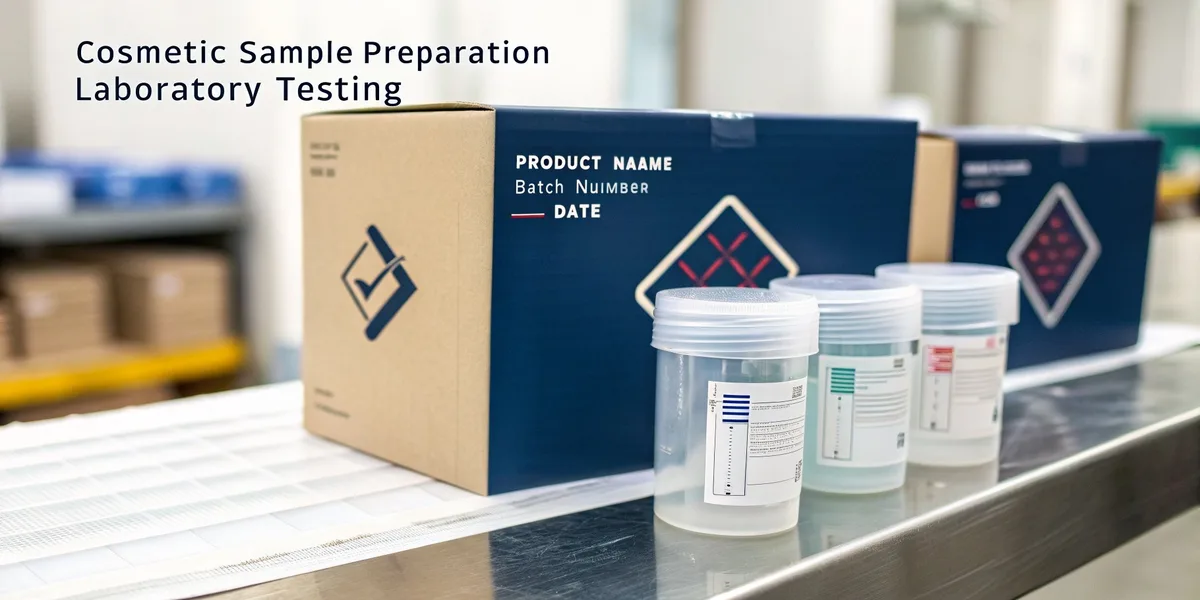
Provide a minimum of 200–300g (or mL) of product per test in sterile, sealed containers. This quantity allows the laboratory to conduct all required organism inoculations (5 separate samples for ISO 11930), perform measurements at multiple time points, retain archive samples for verification, and account for sample loss during handling.
Ideal containers include original product packaging manufactured under ISO 22716 [5] GMP conditions, sterile laboratory jars with screw caps, or clean glass/plastic containers sterilized with 70% alcohol. Each container must be labeled with the product name, batch/lot number, manufacturing date, and your company name. Use waterproof labels or permanent marker.
Documentation Requirements
Include these documents with your sample shipment for a complete cosmetic formulation assessment:
- Complete INCI ingredient list with preservative concentrations
- Product pH value (measured, not estimated — critical for result interpretation)
- Preservative system details: Names and concentrations of all antimicrobial ingredients
- Product type and intended use: Category (cream, serum, shampoo) and application method
- Water activity (if known): Helps laboratory assess testing necessity
- Special handling instructions: Temperature sensitivity, mixing requirements
- Purchase order or quote reference
Ship using tracked courier service (DHL, FedEx, UPS) with 1–3 day delivery at ambient temperature (15–25°C). For international UK-EU shipments, include a customs declaration describing the contents as "cosmetic samples for laboratory testing, no commercial value."
Common mistakes that cause rejection: sending less than 200g, contaminated samples, missing ingredient lists, unlabeled containers, and expired products. Prepare thoroughly to avoid delays in your challenge test cosmetics process. A complete and well-documented submission ensures the challenge test procedure can begin promptly.
What Happens If My Product Fails?
A failed challenge test (Grade C in ISO 11930 [2], or failure to meet USP 51 criteria) means your preservative system does not adequately protect against microbial contamination. Test failures are common during cosmetic development and are solvable through systematic troubleshooting and reformulation.
Common Reasons for Failure
Insufficient preservative concentration: The most common cause. Many formulators use minimum recommended concentrations without accounting for formulation-specific factors such as pH, ingredient interactions, and packaging type. The solution is to increase concentration within approved regulatory limits.
Incorrect pH for the preservative system: Many preservatives are pH-dependent. Benzoic acid and sorbic acid require pH below 5.0 to function effectively. Using them at pH 6.0 results in failure regardless of concentration.
Preservative-ingredient incompatibilities: Clays and mica can bind preservatives. Some proteins inactivate parabens. Botanical extracts may contain preservative-degrading enzymes. Review ingredient interactions during your cosmetic formulation development.
Specific organism resistance: Pseudomonas aeruginosa is notoriously resistant to many preservatives. Aspergillus brasiliensis (mold) requires different preservation strategies than bacteria. Chelating agents like EDTA can boost efficacy against resistant organisms.
Reformulation Strategies
Proven approaches to achieve a passing preservative efficacy test after failure:
- Increase preservative concentration by 0.1–0.2% increments within approved limits
- Add chelating agents (0.1–0.2% EDTA or sodium phytate) to enhance preservative efficacy
- Optimize pH to the preservative's effective range (typically 4.0–5.5 for weak acid preservatives)
- Use preservative blends with complementary mechanisms (e.g., phenoxyethanol + ethylhexylglycerin)
- Implement multi-hurdle preservation combining preservatives + low pH + reduced water activity
- Switch preservative systems entirely if current system consistently fails
Retest Process
After reformulating, manufacture a new batch, allow 7 days minimum stabilization, measure pH, and ship 250g minimum to the laboratory. The preservative challenge test retest follows the same 30–35 day standard protocol (or 16–18 days rush). Retest pricing is typically €150–€250 for a full retest or €80–€150 for a partial retest of the failing organism only.
Case Study: Natural Skincare Brand Achieves Grade A After Initial Failure
A natural skincare brand submitted a water-based hyaluronic acid serum preserved with 0.8% benzyl alcohol and 0.2% benzoic acid (pH 5.8) for ISO 11930 challenge testing. The initial test returned Grade C: bacteria achieved only a 1-log reduction by Day 7, and Aspergillus brasiliensis showed growth by Day 14.
The formulator made three changes: lowered pH from 5.8 to 4.8 (optimizing benzoic acid efficacy), added 0.3% potassium sorbate for enhanced mold protection, and added 0.1% EDTA as a chelating agent.
The reformulated product passed with Grade A on retest: bacteria showed 3-log reduction by Day 2 and complete elimination by Day 14. Mold showed 2-log reduction by Day 14 with no recovery. Total cost: €350 (initial test) + €200 (retest) = €550 in testing. This investment prevented a potential product recall estimated at €10,000–€50,000+ in direct costs and reputational damage.
Never launch a water-based cosmetic product without challenge test results. The cost of testing (€250–€400) is negligible compared to the potential cost of a product recall (€10,000–€50,000+) and reputational damage.
Natural Cosmetics and Challenge Testing
Natural and organic cosmetic brands face unique challenges with preservative efficacy testing due to limited preservative options and consumer expectations for "preservative-free" products. However, natural preservation is achievable with the right formulation strategies and realistic expectations.
Effective Natural Preservative Options
The following preservatives are generally accepted in natural/organic certifications (COSMOS, NaTrue) and can achieve challenge test cosmetics pass results when used at effective concentrations:
- Phenoxyethanol (nature-identical): Broad-spectrum, 0.6–1.0%, COSMOS-approved, effective at pH 4–8
- Benzyl alcohol (natural/nature-identical): Effective at 0.8–1.5%, COSMOS-approved, strong against bacteria
- Benzoic acid / Sodium benzoate: Effective at pH <5.0, 0.2–0.5%, strong against yeast and mold
- Sorbic acid / Potassium sorbate: Effective at pH <5.0, 0.2–0.6%, excellent against fungi
- Levulinic acid + Sodium levulinate: Plant-derived, 0.3–0.6%, COSMOS-approved
- Gluconolactone + Sodium benzoate: Nature-identical blend, 0.3–0.5% each
Multi-Hurdle Preservation Strategy
The most effective approach for natural cosmetics is combining multiple preservation strategies rather than relying on a single preservative. This "multi-hurdle" approach creates multiple barriers to microbial growth:
- Hurdle 1 — Preservative blend: Use 2–3 compatible preservatives at moderate concentrations
- Hurdle 2 — Low pH (4.0–5.5): Acidic conditions enhance weak acid preservative efficacy
- Hurdle 3 — Chelating agents: EDTA or sodium phytate (plant-derived, COSMOS-approved) at 0.1–0.2%
- Hurdle 4 — Reduced water activity: High glycerin concentration (>20%) reduces available water for microbial growth
- Hurdle 5 — Antioxidants: Vitamin E and rosemary extract prevent oxidative breakdown of preservatives
- Hurdle 6 — Packaging: Airless pumps and tubes minimize contamination during consumer use
When approaching challenge test cosmetics with natural formulations, be realistic: "preservative-free" is a myth for water-containing cosmetics. All water-based products require antimicrobial protection. Natural preservatives are more pH-sensitive and formulation-dependent than synthetic options, so expect more iterations. Natural cosmetic formulation with successful challenge test for cosmetics results is absolutely achievable but requires more expertise and patience.
UK vs EU Challenge Testing Post-Brexit
Since Brexit, cosmetic manufacturers selling in both UK and EU markets face new administrative requirements. The scientific requirements for cosmetic challenge testing remain identical, and test reports are accepted across both markets.
Regulatory Framework Differences
EU: Governed by EU Regulation 1223/2009 [1]. Products notified via Cosmetic Products Notification Portal (CPNP). Requires an EU-based Responsible Person.
UK: Governed by UK Regulation 1223/2009 (retained EU law). Products notified via Submit Cosmetic Product Notifications (SCPN). Requires a UK-based Responsible Person.
Both regulators accept the same test methods: ISO 11930 [2] (preferred), USP 51, and PCPC. A preservative efficacy test conducted to ISO 11930 in an ISO 17025 [4] accredited laboratory is valid for both markets. You do not need separate testing.
Practical Considerations
Laboratory accreditation: ISO 17025 accreditation from any national body (UKAS, DAkkS, COFRAC, ACCREDIA, ENAC) is recognized in both jurisdictions. Choose your laboratory based on service quality and pricing, not location.
Shipping: UK-EU sample shipments require customs declarations. Allow 2–5 extra days for customs clearance. Use express courier (DHL, FedEx, UPS) and declare contents as "cosmetic samples for laboratory testing, no commercial value."
For brands selling in both markets: conduct a single challenge test using ISO 11930, use the same report for both CPNP and SCPN notifications, and ensure both Responsible Persons have access. Brexit adds administrative overhead but does not require duplicate challenge test cosmetics testing or separate cosmetic regulations compliance.
Choosing an ISO 17025 Accredited Lab
Selecting the right laboratory for your challenge test for cosmetics is crucial for reliable results, regulatory acceptance, and cost-effectiveness. ISO 17025 [4] accreditation is non-negotiable for EU compliance.
Why ISO 17025 Accreditation Matters
ISO 17025:2017 [4] demonstrates technical competence (trained staff, calibrated equipment), documented quality management systems, independent external oversight through regular audits, and regulatory recognition by EU safety assessors. Test reports from non-accredited laboratories will be rejected for EU Regulation 1223/2009 [1] compliance.
Questions to Ask Your Lab
Before selecting a laboratory for cosmetic challenge testing, verify:
- Is the lab ISO 17025 accredited specifically for cosmetic challenge testing? General microbiology accreditation is not sufficient. Check the accreditation scope covers ISO 11930 or your required method.
- What is the standard turnaround time? Typical: 30–35 days. Be cautious of promises significantly faster without rush fees.
- Is rush service available, and what is the cost premium? Rush typically costs 50% more for a 16–18 day timeline.
- What is the retest pricing after reformulation? Reputable labs offer reduced pricing (€150–€250 vs full price).
- What sample quantity and documentation are required? Standard: 200–300g minimum with INCI list, preservative details, and pH value.
- Is technical consultation on results interpretation included?
- What format is the final report delivered in? Verify it includes organism counts, log reductions, grade classification, and accreditation details for quality assurance.
When evaluating laboratories for your challenge test cosmetics needs, watch for these red flags: no current ISO 17025 certificate, unrealistic turnaround promises (e.g., "results in 10 days"), accreditation for general microbiology only, vague pricing, or no experience with cosmetic products.
How to Get Started with Challenge Testing
Ready to validate your cosmetic product's preservative system? Here is the step-by-step process to navigate the challenge test for cosmetics from initial inquiry to placing your products on the EU market.
Your 7-Step Process
- Finalize your formulation: Manufacture a representative batch under ISO 22716 [5] GMP conditions. Verify pH, confirm preservative concentrations, and document the complete INCI list. Allow 7 days minimum stabilization.
- Select a laboratory: Contact 2–3 ISO 17025 [4] accredited labs. Request pricing for ISO 11930 (EU/UK) or USP 51 (US). Compare turnaround, retest pricing, and technical support.
- Prepare and ship samples: 250g minimum in sterile, sealed, labeled containers with complete documentation (INCI, pH, preservative details). Ship via tracked courier.
- Laboratory testing period: 28-day preservative efficacy test protocol with measurements at Days 0, 2, 7, 14, 28. Most labs provide status updates at key milestones.
- Receive and review test report: Verify product identification, organism coverage, log reduction values, grade classification, and accreditation details.
- Integrate results into CPSR: Provide the report to your safety assessor. Grade A confirms adequate preservation for CPSR Part A. CPSR completion takes 5–10 days.
- Register on CPNP/SCPN: Submit product notification with completed CPSR. Registration is immediate upon submission. Store all documentation in your Product Information File (PIF).
Implementation Timeline
- Today: Finalize formulation and begin laboratory selection
- This week: Request quotes, prepare samples, ship to laboratory
- This month: Testing period begins (28-day protocol)
- Weeks 5–6: Receive report, integrate into CPSR
- Weeks 6–7: CPNP/SCPN registration, market ready with valid preservative challenge test documentation
- Ongoing: Retest only when formulation, packaging, or suppliers change
Total timeline: 6–9 weeks from sample shipment to market readiness (or 4–5 weeks with rush service). Build buffer time for potential reformulation and retesting of your challenge test cosmetics products.
Ready to Test Your Product? →Frequently Asked Questions
What is the difference between a challenge test and preservative efficacy test?
They are the same test with different names. A challenge test, preservative efficacy test (PET), and antimicrobial efficacy test (AET) all refer to the same laboratory procedure that evaluates whether a cosmetic product's preservative system can eliminate microorganisms introduced during normal use. The term used depends on region and regulatory context.
Do all cosmetic products need a challenge test?
No. Water-based products and emulsions (creams, lotions) require challenge testing because they support microbial growth. Anhydrous products (oils, balms), powders, and single-use packaging are generally exempt due to low water activity. Products with more than 20% alcohol are often self-preserving and may not require testing.
How much does a cosmetic challenge test cost in Europe?
A standard cosmetic challenge test costs between €200 and €450 per product in Europe, depending on the test method chosen. ISO 11930 (EU standard) typically costs €250–€400, USP 51 costs €200–€350, and PCPC method costs €250–€400. Rush service adds approximately 50% to the standard price.
How long does a challenge test take?
A standard challenge test takes 30–35 days: 28 days for the testing period plus 2–7 days for reporting. Rush service is available with a 14-day testing period, delivering results in 16–18 days total. The 28-day duration is set by the test protocol and cannot be shortened for standard testing.
Is a challenge test required for CPSR (Cosmetic Product Safety Report)?
Yes, for most cosmetic products. EU Regulation 1223/2009 requires CPSR Part A to include evidence of adequate preservation. For water-containing products, a challenge test (preservative efficacy test) is the standard method to demonstrate this. Safety assessors typically require ISO 11930 results before completing the CPSR.
What microorganisms are used in challenge testing?
ISO 11930 uses five standard organisms: Escherichia coli (Gram-negative bacteria), Pseudomonas aeruginosa (Gram-negative bacteria), Staphylococcus aureus (Gram-positive bacteria), Candida albicans (yeast), and Aspergillus brasiliensis (mold). USP 51 uses the same panel minus Pseudomonas aeruginosa (four organisms).
Do anhydrous (waterless) cosmetics need challenge testing?
Generally no. Anhydrous products like pure oils, balms, and butters have very low water activity (below 0.6 aw), which does not support microbial growth. ISO 29621 provides guidance on identifying microbiologically low-risk products. However, if an anhydrous product may contact water during use (e.g., a balm applied with wet hands), a safety assessor may still recommend testing.
What is the difference between ISO 11930, USP 51, and PCPC methods?
ISO 11930 is the European standard using 5 organisms with Grade A/B/C classification. USP 51 is the US Pharmacopeia method using 4 organisms with different acceptance criteria. PCPC is an industry method using 5 organisms. For EU/UK markets, ISO 11930 is preferred. For US markets, USP 51 is standard. PCPC is accepted in both regions.
How do I prepare samples for challenge testing?
Provide 200–300g minimum of product in sterile, sealed containers (original packaging if possible). Label each container with product name, batch number, and manufacturing date. Include the complete ingredients list, pH value, and preservative system details. Ship at ambient temperature with protective packaging. Most labs reject samples without complete documentation.
What does it mean if my product fails a challenge test?
A failed challenge test means your preservative system does not adequately control microbial growth. Common fixes include increasing preservative concentration, switching to a more effective preservative system, adjusting pH to the preservative's optimal range, or adding chelating agents like EDTA. After reformulation, you will need a retest (typically €150–€250).
Can I use natural preservatives and still pass challenge testing?
Yes, but it requires careful formulation. Effective natural and nature-identical preservatives include phenoxyethanol, benzyl alcohol, benzoic acid, and sorbic acid. A multi-hurdle approach combining several preservation strategies (preservative blend, pH control, low water activity, chelating agents) gives the best chance of passing. Natural preservation is achievable but typically requires more formulation expertise.
Is challenge testing required for alcohol-based hand sanitizers?
Products containing more than 20% ethanol are generally considered self-preserving due to the antimicrobial properties of alcohol. Challenge testing is usually not required for these products. However, if the alcohol content drops below 20% or the product contains water-rich botanical extracts, testing may still be recommended by your safety assessor.
What is the acceptance criteria for challenge test results?
Under ISO 11930, bacteria must show at least a 2-log reduction by Day 2, a 3-log reduction by Day 7, and no recovery through Day 28. Yeast and mold must show no increase by Day 7 and at least a 1-log reduction by Day 14 with no recovery. Products meeting all criteria receive a Grade A (pass). Grade B is a conditional pass, and Grade C is a fail.
Do I need to retest my product every year?
No, annual retesting is not required if your formulation remains unchanged. You need to retest only when you change the formulation (ingredients, concentrations, or suppliers), change the packaging material, encounter stability issues during shelf life, or when regulatory requirements change. Keep your original test report as part of the Product Information File (PIF).
Sources & References
- European Parliament and Council. "Regulation (EC) No 1223/2009 of the European Parliament and of the Council of 30 November 2009 on cosmetic products." EUR-Lex, 22 December 2009. https://eur-lex.europa.eu/legal-content/EN/TXT/?uri=CELEX:32009R1223. Accessed 17 February 2026.
- International Organization for Standardization. "ISO 11930:2019 — Cosmetics — Microbiology — Evaluation of the antimicrobial protection of a cosmetic product." ISO, July 2019. https://www.iso.org/standard/70954.html. Accessed 17 February 2026.
- United States Pharmacopeia. "Chapter <51> Antimicrobial Effectiveness Testing." USP-NF. https://www.usp.org/. Accessed 17 February 2026.
- International Organization for Standardization. "ISO 17025:2017 — General requirements for the competence of testing and calibration laboratories." ISO, November 2017. https://www.iso.org/standard/66912.html. Accessed 17 February 2026.
- International Organization for Standardization. "ISO 22716:2007 — Cosmetics — Good Manufacturing Practices (GMP) — Guidelines on Good Manufacturing Practices." ISO, November 2007. https://www.iso.org/standard/36437.html. Accessed 17 February 2026.
- U.S. Food and Drug Administration. "Microbiological Safety and Cosmetics." FDA, 3 February 2022. https://www.fda.gov/cosmetics/potential-contaminants-cosmetics/microbiological-safety-and-cosmetics. Accessed 17 February 2026.
- International Organization for Standardization. "ISO 29621:2017 — Cosmetics — Microbiology — Guidelines for the risk assessment and identification of microbiologically low-risk products." ISO, February 2017. https://www.iso.org/standard/68310.html. Accessed 17 February 2026.
- Cosmetics Europe. "Guidelines on Microbial Quality Management (MQM)." Cosmetics Europe, 2021. https://cosmeticseurope.eu/. Accessed 17 February 2026.
Get Your Challenge Test Quote
Ready to validate your cosmetic product's preservative system? Fill out the form below to receive a customized quote from an ISO 17025 accredited laboratory. We will provide pricing, timeline, and sample preparation instructions.